Senin, 21 April 2014

Inspiring Stories Summary

Taking out the rivers' trash


In the past 15 years, Chad Pregracke has helped pull more than 67,000 tires from the Mississippi River and other waterways across the United States.
He's also helped retrieve 218 washing machines, 19 tractors, 12 hot tubs, four pianos and almost 1,000 refrigerators.
"People intentionally dumped in the river and also littered," Pregracke said. "Even 100 miles away, (trash) will find its way into a creek or a storm drain and into, ultimately, the Mississippi River."
For Pregracke, removing this debris has become his life's work. Sometimes called "The Rivers' Garbageman," he lives on a barge about nine months out of the year with members of his 12-person crew. Together, they organize community cleanups along rivers across the country.
It's a dirty job, but Pregracke, 38, took it on because he realized that no one was doing it. It began as a solo effort, and over the years his energy, enthusiasm and dedication have helped it grow. To date, about 70,000 volunteers have joined his crusade, helping him collect more than 7 million pounds of debris through his nonprofit, Living Lands & Waters.
Pregracke grew up in East Moline, Illinois, where the Mississippi River was in his backyard. As a teenager, he worked as a commercial shell diver and began to notice the heaps of debris in the fabled waterway one that supplies drinking water to 18 million people in more than 50 U.S. cities.
"I saw thousands of barrels, thousands of tires, cars, trucks and tops of school buses. I got sick of seeing it and just wanted to do something about it," he said.
With persistence, Pregracke got a small grant from Alcoa in 1997 and spent that summer cleaning a 35-mile stretch of the river by himself. He would transport the trash by boat and sort it on his parents' lawn to be recycled. By year's end, he had single-handedly pulled around 45,000 pounds of trash out of the river.
His operation has become much more sophisticated since those early days,. And while he has resources and know-how, he depends on each community he visits to supply the manpower needed to get the job done.
On average, Pregracke says he organizes 70 cleanups a year in 50 communities. The cleanups are posted on the nonprofit's website, Facebook and other outlets so people know where and when they can volunteer.
Picking up garbage, it's tough, miserable and hot.
At the cleanup sites, Pregracke's passion for the work is contagious, and his humor creates an upbeat atmosphere -- something he knows is necessary for the work that they do. His team uses skits, mock motivational speeches and music to get the volunteers amped up, and sometimes they might find themselves doing a little karaoke on their DJ boat.
"We do everything in our power to get people excited about it," Pregracke said. "We want people to leave feeling good about what they did so they'll come back."
Teams also compete to see who can find the "best" garbage a poker-like game in which two bowling balls tops three refrigerators and a message in a bottle trumps everything.
"Picking up garbage, it's tough, miserable and hot. We try to make it fun," he said.
At the end of the day, the volunteers head back to shore and make a human chain to bring the day's haul onto the barge and sort it out. Close to 90% of what they recover is recycled; Pregracke says the rest gets disposed of properly.
He believes that volunteers get a huge sense of accomplishment from seeing the garbage piled up at the end of the cleanup, and he considers that just as important as the amount of trash they help collect.
"(I'm) creating a chance for people to go out there and do something positive," he said. "Talking is great, but it doesn't do much at all. Action is what I'm about."
Throughout the year, Pregracke's flotilla travels on rivers throughout the Midwest. For the past three years, the group has visited Memphis, Tennessee, each spring to help clean up a harbor on the Mississippi River where the waters are thick with debris. During their most recent visit, they collected more than 120,000 pounds of garbage in 14 working days.
"It's a really negative deal, the worst thing I've ever seen, but I've never been to a city that's had more people coming out saying, 'Let's do something about this.' It's a cool thing," Pregracke said.
In addition to the river cleanup, Pregracke has launched a floating classroom barge, where his staff educates high school students and teachers about the damages of pollution on river ecosystems. And in 2007, his nonprofit implemented a program to plant 1 million trees along river shorelines to protect and restore the natural environment. The group is halfway to its goal.
Pregracke says his nonprofit has already held more than 700 cleanups on 23 rivers, but he says that he's just getting started. He views his work as a different kind of service to the country.
"A lot of people call me a conservationist or an environmentalist, but the thing is I'm no different than anybody else," he said. "I just want to be known as a hardworking American."
Ultimately, Pregracke says, his message is about much more than cleaning rivers. He believes his story is proof that anyone can make a difference:
"If I had one thing to say, it wouldn't even be about rivers necessarily. It would be about finding (a) cause that's dear to you and taking action.
"Change is slow, like a barge or train, but once it builds momentum, it's hard to stop."

source: http://edition.cnn.com/

Question
1. Who is the river garbage man?
    A. The Old Jenkins
    B. Chad Pregracke
    C. Chad the Youngster
    D. The 12 crews
    E. The Volunteers

2. Why Pregracke volunteered him self to clean the river?
   A.  Because his mom force him
   B.  Because he cares about the Mississippi river
   C.  Because he believes it is crusade mission
   D.  Because he grows near Mississippi river
   E.   Because there are 70.000 volunteers ready to clean the river

3. What things most people dumped into river?
  A.  Refrigerators
  B.  Waters
  C.  Tires
  D.  Mother in laws
  E.  Washing machines

4. How many member of Preckage person crew?
  A.  f '(x) of 12x
  B.  √12 X 0.5√7
   C.  log√5x10⁻¹⁰
   D.  f '(x) of (-5x)/(2x sin45 )
   E.  lim┬(n→∞)(1+1x/10x)^5

5. Why does picking up garbage is tough?
  A.  Because it is miserable
  B.  Because it is hard and full of work
  C.  Because its more than 1 ton
  D.  Because someone has to do it
  E.  Because the river is to heavy

Rabu, 19 Februari 2014

Film Summary

Waterloo

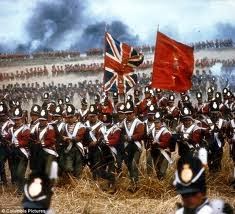
Waterloo is a 1970 Soviet-Italian film directed by Sergei Bondarchuk and produced by Dino De Laurentiis. It is a film about events of Battle of Waterloo, and is famous for its magnificent battle scenes. It stars Rod Steiger as Napoleon Bonaparte and Christopher Plummer as the Duke of Wellington with a cameo by Orson Welles as Louis XVIII of France. Other stars include Jack Hawkins as General Picton, Virginia McKenna as the Duchess of Richmond and Dan O'Herlihy as Marshal Ney. The film includes 15,000 Soviet foot soldiers and 2,000 cavalrymen as it was said that, during its making, director Sergei Bondarchuk was in command of the seventh largest army in the world. Fifty circus stunt riders were used to perform the dangerous horse falls. These numbers brought an epic quality to the battle scenes.

Plot
The film opens on Chateau de Fontainebleau in 1814, after the disastrous Russian campaign and the defeat at Leipzig, with Paris besieged by the Austrians. Napoleon Bonaparte is urged by his marshals to abdicate. He totally refuse it, but upon hearing of the surrender of his last army under Auguste Marmont he realizes there is no hope anymore. Then he is banished to the island of Elba with a personal guard of 1000 men, but manages to escape and returns to France.

Marechal Ney, now serving the monarchy of the restored Bourbon king, is tasked with recapturing him. The two French armies meet, but instead of ordering his men to engage, Napoleon comes forward and asks Ney's men "if they want to kill their emperor." The soldiers immediately mutiny and Ney joins his former emperor. Napoleon arrives in Paris with crowds and King Louis flees for his life. Despite Napoleon's request for peace, the other European powers immediately declare war on him.

Napoleon invades Belgium to quickly defeat the Allied forces piecemeal before they can unite. Meanwhile, Arthur Wellesley, 1st Duke of Wellington , the commander of the British forces, attends the Duchess of Richmond's ball. One young officer, Lord Hay, is engaged to her daughter, and the Duchess begs Wellington to keep him away from the battlefield. The ball is interrupted by the Prussian commander von Müffling, who announces that Napoleon has crossed the border. Wellington realizes that Napoleon has got between himself and the Prussian forces. Hastily looking at his map, he decides to attempt a stand at Quatre-Bras at the same time openly admiring Napoleon's genius.

The next morning, Napoleon is informed that the rain has made the ground too soft for the French cannon. The attack is delayed. The battle starts shortly after 11.30 am with cannon fire from the French. Napoleon then sends a diversionary infantry attack against Wellington's right flank, where the British have turned the farmhouse of Hougoumont into a fort. However Wellington does not take the bait and refuses to weaken the center to support his flank.
Then what is Napoleon decision to defeat Wellington in this very decisive situation?

Production and expenses
Columbia Pictures published a 28-page, full-colour pictorial guide when it released Waterloo in 1970. According to the guidebook, Italian producer Dino De Laurentiis had difficulty finding financial funds for the massive expenses until he finally began talks with the Russians in the late 1960s and reached agreement with the Mosfilm organization. Final costs were over £12 million (UK) (same about US $38.3 million in making Waterloo,for this time this film is one of the most expensive movies ever made.
To recreate the battlefield authentically, the Russians bulldozed away two hills, laid five miles of roads, transplanted 5,000 trees, sowed fields of rye, barley and wildflowers and reconstructed four historic buildings. To create the mud, more than six miles of underground irrigation piping was specially laid. Most of the battle scenes were filmed using five Panavision cameras simultaneously from ground level, 100 foot towers, a helicopter, and an overhead railway built right across the location.

Moral Value
Do not attack each other find the war solutions by peace diplomacy
Be obedient to the leader
Decide problem solving properly and quickly

Source: en.wikipedia.org

Question
1. Who is the main person in the waterloo film?
   A.  Louise XVIII of France
   B.  Dino de Laurentiis
   C.  Napoleon Bonaparte II
   D.  Duke of Wllington
   E.  The first French emperor

2. How many foots soldiers are needed to produce this film?
   A.  lim┬(x→∞) (300x^2+600x 1/(72√8000x))
    B.  15.000 cos 0
    C.  lon 10000
    D.  7
    E. ∛2333

3. Who is the second in command for French army?
  A.  Napoleon Bonaparte
  B.  Duchess of Richmond
  C.  Von Muffling
  D.  Marechal Ney
  E.  Marechal Soult

4. How much the expenses to produce this film?
  A.  £38,8 millions
  B.  ¥38,8 millions
  C.  €38,8 millions
  D.  ₣38,8 millions
  E.  $38,8 millions

5. Why does Napoleon urged to abdicate
  A.  Because his son replace him
  B.  Because his mother replace him
  C.  Because Paris has besieged by Austria
  D.  Because US has sign the declaration of Independent
  E.  Because his mother in law went mad

Rabu, 22 Januari 2014

Gerund and Infinitive

Gerund
1. Ionizing compound is very interesting
2. He went swimming the day after doomsday
3. The Einstain approximation is very interesting
4. I like experimenting elephant brain
5. I hate losing from Stephen Hawking
6. The Neanderthal stops hunting deer
7. Your success in genetical recombination is surprising me
8. He is using electrical fluctuation  to win the competition
9. I am calculating about the acquisition of log 0,0005
10. I like watching prestidigitator on theater

Infinitive
1. To kill someone is easy for me
2. We use catalyst to decrease the compound reaction time
3. I used to ornitophobia when i in outdoor
4. I was told by my lecturer to think about The Alien Parasite Hypothesis
5. I promise to mom to distilate the sea water before i taste the sea salt
6. The barbarian used to cut their enemy head
7. She was allow me to chop the spine of guinea pig
8. I use deviation formula to find the reflected light
9. She comes here just to poke you
10. He asked me to eat garbage

The Black Death


The Black Death arrived in Europe by sea in October 1347 when 12 Genoese trading ships docked at the Sicilian port of Messina after a long journey through the Black Sea. The people who gathered on the docks to greet the ships were met with a horrifying surprise: Most of the sailors aboard the ships were dead, and those who were still alive were gravely ill. They were overcome with fever, unable to keep food down and delirious from pain. Strangest of all, they were covered in mysterious black boils that oozed blood and pus and gave their illness its name: the “Black Death.” The Sicilian authorities hastily ordered the fleet of “death ships” out of the harbor, but it was too late: Over the next five years, the mysterious Black Death would kill more than 20 million people in Europe–almost one-third of the continent’s population.


"The Black Death"

Even before the “death ships” pulled into port at Messina, many Europeans had heard rumors about a “Great Pestilence” that was carving a deadly path across the trade routes of the Near and Far East. (Early in the 1340s, the disease had struck China, India, Persia, Syria and Egypt.) However, they were scarcely equipped for the horrible reality of the Black Death. “In men and women alike,” the Italian poet Giovanni Boccaccio wrote, “at the beginning of the malady, certain swellings, either on the groin or under the armpits…waxed to the bigness of a common apple, others to the size of an egg, some more and some less, and these the vulgar named plague-boils.” Blood and pus seeped out of these strange swellings, which were followed by a host of other unpleasant symptoms–fever, chills, vomiting, diarrhea, terrible aches and pains–and then, in short order, death. The Black Death was terrifyingly, indiscriminately contagious: “the mere touching of the clothes,” wrote Boccaccio, “appeared to itself to communicate the malady to the toucher.” The disease was also terrifyingly efficient. People who were perfectly healthy when they went to bed at night could be dead by morning.

Understanding the Black Death
Today, scientists understand that the Black Death, now known as the plague, is spread by a bacillus called Yersina pestis. (The French biologist Alexandre Yersin discovered this germ at the end of the 19th century.) They know that the bacillus travels from person to person pneumonically, or through the air, as well as through the bite of infected fleas and rats. Both of these pests could be found almost everywhere in medieval Europe, but they were particularly at home aboard ships of all kinds--which is how the deadly plague made its way through one European port city after another. Not long after it struck Messina, the Black Death spread to the port of Marseilles in France and the port of Tunis in North Africa. Then it reached Rome and Florence, two cities at the center of an elaborate web of trade routes. By the middle of 1348, the Black Death had struck Paris, Bordeaux, Lyon and London. 

Today, this grim sequence of events is terrifying but comprehensible. In the middle of the 14th century, however, there seemed to be no rational explanation for it. No one knew exactly how the Black Death was transmitted from one patient to another–according to one doctor, for example, “instantaneous death occurs when the aerial spirit escaping from the eyes of the sick man strikes the healthy person standing near and looking at the sick”–and no one knew how to prevent or treat it. Physicians relied on crude and unsophisticated techniques such as bloodletting and boil-lancing (practices that were dangerous as well as unsanitary) and superstitious practices such as burning aromatic herbs and bathing in rosewater or vinegar. 

Meanwhile, in a panic, healthy people did all they could to avoid the sick. Doctors refused to see patients; priests refused to administer last rites. Shopkeepers closed stores. Many people fled the cities for the countryside, but even there they could not escape the disease: It affected cows, sheep, goats, pigs and chickens as well as people. In fact, so many sheep died that one of the consequences of the Black Death was a European wool shortage.  And many people, desperate to save themselves, even abandoned their sick and dying loved ones. “Thus doing,” Boccaccio wrote, “each thought to secure immunity for himself.”

God's Punishment?
Because they did not understand the biology of the disease, many people believed that the Black Death was a kind of divine punishment–retribution for sins against God such as greed, blasphemy, heresy, fornication and worldliness. By this logic, the only way to overcome the plague was to win God’s forgiveness. Some people believed that the way to do this was to purge their communities of heretics and other troublemakers–so, for example, many thousands of Jews were massacred in 1348 and 1349. (Thousands more fled to the sparsely populated regions of Eastern Europe, where they could be relatively safe from the rampaging mobs in the cities.)

Some people coped with the terror and uncertainty of the Black Death epidemic by lashing out at their neighbors; others coped by turning inward and fretting about the condition of their own souls. Some upper-class men joined processions of flagellants that traveled from town to town and engaged in public displays of penance and punishment: They would beat themselves and one another with heavy leather straps studded with sharp pieces of metal while the townspeople looked on. For 33 1/2 days, the flagellants repeated this ritual three times a day. Then they would move on to the next town and begin the process over again. Though the flagellant movement did provide some comfort to people who felt powerless in the face of inexplicable tragedy, it soon began to worry the Pope, whose authority the flagellants had begun to usurp. In the face of this papal resistance, the movement disintegrated. 

The Black Death epidemic had run its course by the early 1350s, but the plague reappeared every few generations for centuries. Modern sanitation and public-health practices have greatly mitigated the impact of the disease but have not eliminated it.

source http://www.history.com
           http://en.wikipedia.org


Selasa, 21 Januari 2014

The Next Galactic Federation Consul from Earth Representative


Ladies, Gentleman, Aliens, Monsterious creature, Ionized plasma cells, floating bodily fluids, and many other mischief and their acquaintance. In the name of God i shall welcome you all to our Galactic consulate main ship "The Hepahistos" to listening for the candidate campaign. As you know my name is Alidza Fauzi or 1000001 1000101 1001001 1001000 1111111 1000001 in Binaries numbers. This heavy duty may become determinant for our future, so i hope whoever elected for the first consul of galactic federation must be wise, smart, effective, dedicated, and mentality strong. With this such absolute authority he or she must can take advanced solution for many trouble that we have to faced. Then i will tell you about my vision and mission. My vision is to unite the member of galactic federation and make all of them prosperous under the banner of federation. As you know that our hostility with Ba'al Homman Empire become threat, then we need to unite and bring peace across the planet. As the first minister of Peace from earth i will declare my postulant to become first consul and bring peace and harmony both for galactic federation and Ba'al Homman Empire. My mission is i will increase the rate friendly diplomacy with all planet state, Increase the federation Imperial army, and open more trading route with safety. then for the developed planets they must help another developing planet to reach their developed status. To achieve this we must work as team, avoid the racism, open the information freely, and let us hope another prosperous day for all members of galactic federation . That is all for my speeches thank you for your attention may the Creator bless us all. Victory for federation once and for all!

Rabu, 15 Januari 2014

Holiday

My Holiday

Although when the holiday semester coming i was not going for the trip, then my holiday is appear when the day is school day. My holiday began from the trip to Europe, it is very remarkable trip that hard to forget. It is began on 31 October 2013 that my family went to the Soekarno-Hatta airport for the Europe trip, then we met with the tour guide and other members of notary that grouping with us.

About 8 hours we fly with Air Emirates then we transited in Dubai about 3 hours we waited and its fly again about 6 hours and landed in Rome

Finally we arrived in Rome the temperature outside about 15 Celcius degrees its a sunny weather then we went to ride Inter regional Bus the driver is Italian man called Antonio. First we went to Vatican to saw St Peter Basilica. It is a small state in the middle of Italian Republic. The Basilica is crowded that we need to lining up to enter the interior of Basilica. It is indeed a historical, religious, and artistic place for visit

After that we went to Colosseum that built for the people of roman empire. This combat theater is famous for the gladiator and the chariot


Then we went to rounded along the city of Rome and we stay In hotel

The next morning we went to Pisa and visit the leaning tower of Pisa

Then we went to Prato to shop in modern shopping valley, eat traditional Pizza, and stay in hotel
The next day we went to Venice it is very authentic European place this is one of the most remarkable place. We took a ride with gondola within the Choirman and accordion player. In the night we ate the Nero Spaghetti and stayed in hotel

The next day we went to Verona to visit the Romeo and Guilette Place then we headed to Milan to visit the Gallery Vittorio Emanuelle II and Milan Cathedral
   

The next day we went to Lugano Switzerland, we stopped in Fox Town for shopping then we continued the trip to Lugano. In lugano we can saw a great panoramic lake of lugano, we eat and continued the trip to Interlaken and we stay in Interlaken hotel


The next day we continue the trip through the Alps and went to the one of the top of europe Jungfrau Joch, we went there by a mountain train. After that we went Lucerne and spend the night in hotel


The next day we went to cross the border of Switzerland and Germany we went toTitise to saw the making of cuckoo clock, then to Schaffhausen to saw the Rhine falls and Black Forrest, and than we went to Frankfurt to spend the night in hotel


The next day we went to Cologne the famous city of the Koln parfume and its gothic Cathedral and we spend the night in Amsterdam, Netherlands


In the morning we went to Volendam to saw the shores and taking photos with the traditional clothes then in the noon we went back to Amsterdam to saw the Grand Pallace and took ride in canal cruise. Then we continue the trip to Brussels, Belgium to went to atomium and spend the night in hotel


Then at last we went to Paris in the morning we saw Eiffel Tower, Arch de triumph, Ecole Militaire, Des Invaldes, Champs Ellysees, Notre Dame, Place de la Concorde, Musee du Louvre, and Plaza Vendome


The next day we went home, we went to Charles de gaul air port and back to Jakarta within transit in Dubai.Well i hope you enjoyed thank you very much.

Rabu, 08 Januari 2014

Tenses

1.   You will pass away if you study harder
      You would pass away if you studied harder
      You would have passed away if you had studied harder

2.   You will get stomachache if you keep eating trash
      You would get stomachache if you kept eating trash
      You would have got stomachache if you had kept eating trash

3.   You will get vomit a lot of grubs if you keep eating those larva
      You would get vomit a lot of grubs if you kept eating those larva
      You would have got vomit  a lot of grubs if you had kept eating those larva

4.    I will bother you if you still keep breathing
       I would bother you if you still kept breathing
       I would have bothered you if you had still kept breathing

5.   You will get blind if you continue poking your eye
      You would get blind if you continued poking your eye
      You would have got blind if you had continued your eye

6.   You will get disturb by ant while you sleep if you keep spreading honey on your bed
      You would get disturb by ant while you sleep if you kept spreading honey on your bed
      You would have got disturb by ant while you sleep if you had kept spreading honey on your bed

7.   The computer will turn off  if you repeat press the turn on button
      The computer would turn off  if you repeated press the turn on button
      The computer would have turned off if you had repeated press the turn on button

8.   We will not go to school if the day is doomsday
      We would not go to school if the day was doomsday
      We would have not went to school if the day was doomsday

9.  You will get seizures if you drink a liter of insect repellent
     You would get seizures if you drank a liter of insect repellent
     You would have got seizure if you had drunk  a liter of insect repellent

10. You will get chopped if you enter the slaughtering machine
      You would get chopped if you entered the slaughtering machine
      You would have got chopped if you had entered the slaughtering machine


Jumat, 15 November 2013

If

IF

I will happy if i travel through the time
I will happy if i have hover car
I will happy if i have a teleport machine
I will happy if i can resurect someone
I will happy if i home in another planet
I will happy if Napoleon was winning the battle of Waterloo
I will happy if i enter and live in Heaven
I will happy if today is holiday
I will happy if i travel the world
I will happy if i have Napoleon garments

If i have 1 billion i will invested it
If i have 1 billion i will buy a grand armee regiment garments
If i have 1 billion i will make my own zoo
If i have 1 billion i will buy sea aquarium tank
If i have 1 billion i will buy a box of Mathlock gun
If i have 1 billion i will buy massive laser gun
If i have 1 billion i will complete my lego collection 
If i have 1 billion i will buy super computer
If i have 1 billion i will make my own business company
If i have 1 billion i will make a invention factory

Minggu, 03 November 2013

Argument

The only vehicle to go to school is bicycle
As student i agree with the bicycle is only vehicle for go to school because it has a lot of advantage such as healthy that can increase the lung capacity and burn the fat. Then it can make the enviorment clean without polution and without fuel uses. Then it make a lot of space in the parking lot. We dont need to have lisence for riding bicycle so everyone can use it simply. We can give another people job as tire fixer. And another advantage is sometimes we can gain scholarship or prize from government, school, or we can exposed by media maas such as Tv or news paper.

Its true that we can tired because of riding bicycle to school but i have an idea for solving the problem. I think if there is biking post that provide bike for students from distance 500-700 meters radius from school it can help the student from tired problem. So the student that their house far they can use public transportation and stop in biking post and ride bicycle to school. They will not tired and they body will stay helathy and fit, thats all of my argument thank you very much

Sabtu, 19 Oktober 2013

Visa Application

The Embassy of the People's Republic of China in the Republic of Indonesia welcomes Indonesian citizens to China for business, trade and tourism activities. Other countries please read the another announcement. In order to regulate visa application procedure and provide facilitation and better service to the applicants, the Embassy would like, in line with the relevant laws and regulations, to make the following policy announcements:

1.  The Chinese Embassy does not specify or delegate any visa application agent. All applicants are kindly requested to submit their visa applications in person instead of going through various travel agents, brokers or middlemen. Visa officers and visa assistants would interview the applicants when necessary. The applicants have the obligation to provide accurate and comprehensive personal information as required.

2.  Documentation required for visa application:

BUSINESS VISA (F)
Completed visa application form with one white background passport-size photo (should be stuck to the visa form).
Original Visa Notice issued by an authorized unit in China with official seal and authorized signature, and attached with an envelope postmarked by Chinese Post Office.
Flight booking and hotel reservation.
Photocopy and original of business registration certificate and tax clearance
Introductory letter from the employer
Photocopy and original passport valid for more than six (6) months with at least two blank pages
Proof of economic guarantee (such as personal bank account statement or pay slips from employer for at least four months), both original and photocopy

TOURISM VISA (L)
Completed visa application form with one white background passport-size photo (should be stuck to the visa form)
Original invitation letter with an official seal, authorized signature and contact details from a host company or travel bureau in China which enjoys legal person status and must be registered in China. The invitation should be attached with an envelope postmarked by Chinese Post Office

Introductory letter from the employer
Flight booking and hotel reservation
Proof of economic guarantee (such as personal bank account statement or pay slips from employer for at least four months), both original and photocopy
Photocopy and original passport valid for more than six (6) months with at least two blank pages


STUDENT VISA (X)
Completed visa application form with one white background passport-size photo (should be stuck to the visa form)
Fully completed and valid JW202 form of the tertiary institution in China (both original and photocopy)
Valid admission letter from the tertiary institution in China (both original and photocopy).
Alien physical examination record with one white background passport size photo (must be attested at the court)
Photocopy and original passport valid for more than six (6) months with at least two blank pages
Applicant's personal bank account statement if self-sponsored, which should be current for at least six months and must be attested at the court.
For non self-sponsored applicant, a letter of sponsorship, a photocopy of either sponsor's passport, voter's ID card or driving license, photocopy and original of sponsor's bank statement for at least six  months and attested at the court.
Original and photocopy of previous school certificate

EMPLOYMENT VISA (Z)

Original Visa Notice with official seal and authorized signature from an authorized unit in China
Employment permit issued by relevant bureau in China
Alien physical examination record (must be attested at court)
Photocopy and original passport valid for more than six months and with at least two blank pages
A completed visa application form with one white background passport-size photo

3. All applicants must ensure the information filled in the visa

application form is complete, true and accurate, and submit genuine and true documentation accordingly. The visa officer reserves the right to refuse to accept the submission when there is a reasonable doubt on inaccuracy, incompleteness and forgery of the documentation. All applicants are legally responsible for the authenticity of the submitted document and bear all the consequences arising therefrom. The visa application form is available on the website of the Embassy (http://gh.china-embassy.org/eng/lsyw/t182168.htm).

4.  All visa applications should be submitted to the staff of the visa section over the counter within office hours.

5.  The Embassy reiterates that it charges nothing but the visa fees and (or plus) express service charges according to the visa categories (the list of updated visa fee and express service charges is available on the Embassy's website, Http://gh.china-embassy.org/eng/lsyw/t872515.htm).

All applicants should only pay visa fees and (or plus) express service charges with visa pay slip in the Standard Chartered Bank (Opeibia Branch). The Embassy neither accepts cash payment nor bears responsibility for any extra brokerage cost.

6.   The Embassy provides "first come first serve" service and does not recognize ticket numbers issued by anybody beyond the periphery of the visa section. Visa applicants are encouraged to observe the principle of public order and queue up decorously. The Embassy will take measures to improve the condition of the visa reception.

7.  Suggestions and comments on visa issues are welcome. They may be sent to the "suggestion box" in the visa section or mailed to the Embassy or emailed to chinaemb_gh@mfa.gov.cn , with sender's names and contact means. The Embassy pledges to seriously handle with them.

8. This announcement shall come into effect from December 15th,2011.
         
 Embassy of the People's Republic of China


                       in the Republic of Indonesia   

Questions
1. What kinds of activities that Republic of China welcomes for Indonesian citizen?
2. How long the original passport valid that needed to enter the Republic of China?
3. What should be needed for Business Visa?
4. What kind of examination record that needed for employment visa?
5. What is the meaning of "first come first serve" service for China visa?
6. If the Malaysian read this visa application what should they needed?
7. Where should we add suggestion and comments for this visa application?
8. When this announcement shall come effect?

Sabtu, 21 September 2013

Summary of Vendetta Story

Characters: 
1. Paolo Saverini         : Avenger because she want a revenge to Nicolas about her son's death
2. Antoine Saverini      : Truster because he trust Nicolas as his friend
3. Semillante                : Obedient because she always at her master side
4. Nicolas Ravaolati     : Treacherous because he killed Antoine who trust to him as friend
5. Neighbor                 : Giver because the Neighbor gave Paolo straw for free
7. Sardinian Fisherman : Transporter because he transport Paolo from Ajjacio to Sardinia
6. Baker                      : Informants because the Baker gave direction for finding the murderer

Setting:
Place
1. Bonifacio Town
2. Ajjacio
3. Saverini's House
4. Saverini's Yard
5. Church
6. Sardinia Island
7. Longosardo Town

Time
1. Noon
2. Morning
3. Night
4. Sunday Morning

Plot
Forward
prove
Paolo Saverini lived alone with her son in a poor little house on the ramparts of Bonifacio.
She lived there alone with her son Antoine and their bitch Semillante.
Antoine Saverini was treacherously slain by a knife-thrust from Nicolas Ravolati.
she swore vendetta revange against Nicolas.
Antoine Saverini was buried next day, and before long there was no more talk of him in Bonifacio.
It was a little Sardinian village, Longosardo, where Corsican bandits fled for refuge.
She knew that Nicolas Ravolati had taken refuge in this very village.
All alone, all day long, sitting by the window, she looked over there and pondered revenge.
She meditated on it till morning, then, rising at the approach of day, she went to church.
There stood in the yard an old barrel with its sides stove in, which held the rain-water; she overturned it, emptied it, and fixed it to the ground with stakes and stones; then she chained up Semillante in this kennel, and went into the house.
The old woman gave her dog nothing to eat. The dog mad with hunger, barked hoarsely.
Mother Saverini went to her neighbour to ask him to give her two trusses of straw.
She took the old clothes her husband had worn and stuffed them with the straw into the likeness of a human figure.
the woman went to the pork-butcher and bought a long piece of black pudding.
Then with the smoking sausage the mother made a collar for the straw man. 
When it was done, she unchained the dog.
With great bites she rent away the face, and tore the whole neck to shreds.
For three months she trained the dog to this struggle.
She no longer chained her up, but launched her upon the dummy with a sign.
They came to Longosardo. The Corsican woman was limping slightly. She went to the baker's and inquired for Nicolas Ravolati's house.
The old woman pushed open the door and the maddened beast dashed forward and seized his throat.
In the evening the old woman returned home. That night she slept well.

Moral Value
Do not betray others
Do not take revenge by ruthlessly
Patient from the fate

Minggu, 15 September 2013

The Vendetta

The Venndeta
by Guy de Maupassant

PAOLO SAVERINI'S WIDOW lived alone with her son in a poor little house on the ramparts of Bonifacio. The town, built on a spur of the mountains, in places actually overhanging the sea, looks across a channel bristling with reefs, to the lower shores of Sardinia. At its foot, on the other side and almost completely surrounding it, is the channel that serves as its harbour, cut in the cliff like a gigantic corridor. Through a long circuit between steep walls, the channel brings to the very foot of the first houses the little Italian or Sardinian fishing boats, and, every fortnight, the old steamboat that runs to and from Ajaccio.

Upon the white mountain the group of houses form a whiter patch still. They look like the nests of wild birds, perched so upon the rock, dominating that terrible channel through which hardly ever a ship risks a passage. The unresting wind harasses the sea and eats away the bare shore, clad with a sparse covering of grass; it rushes into the ravine and ravages its two sides. The trailing wisps of white foam round the black points of countless rocks that everywhere pierce the waves, look like rags of canvas floating and heaving on the surface of the water.
The widow Saverini's house held for dear life to the very edge of the cliff; its three windows looked out over this wild and desolate scene.
She lived there alone with her son Antoine and their bitch Semillante, a large, thin animal with long, shaggy hair, of the sheep-dog breed. The young man used her for hunting.
One evening, after a quarrel, Antoine Saverini was treacherously slain by a knife-thrust from Nicolas Ravolati, who got away to Sardinia the same night.
When his old mother received his body, carried home by bystanders, she did not weep, but for a long time stayed motionless, looking at it; then, stretching out her wrinkled hand over the body, she swore vendetta against him. She would have no one stay with her, and shut herself up with the body, together with the howling dog. The animal howled continuously, standing at the foot of the bed, her head thrust towards her master, her tail held tightly between her legs. She did not stir, nor did the mother, who crouched over the body with her eyes fixed steadily upon it, and wept great silent tears.
The young man, lying on his back, clad in his thick serge coat with a hole torn across the front, looked as though he slept; but everywhere there was blood; on the shirt, torn off for the first hasty dressing; on his waistcoat, on his breeches, on his face, on his hands. Clots of blood had congealed in his beard and in his hair.
The old mother began to speak to him. At the sound of her voice the dog was silent.
"There, there, you shall be avenged, my little one, my boy, my poor child. Sleep, sleep, you shall be avenged, do you hear! Your mother swears it! And your mother always keeps her word; you know she does."
Slowly she bent over him, pressing her cold lips on the dead lips.
Then Semillante began to howl once more. She uttered long cries, monotonous, heart-rending, horrible cries.
They remained there, the pair of them, the woman and the dog, till morning.
Antoine Saverini was buried next day, and before long there was no more talk of him in Bonifacio.
He had left neither brothers nor close cousins. No man was there to carry on the vendetta. Only his mother, an old woman, brooded over it.
On the other side of the channel she watched from morning till night a white speck on the coast. It was a little Sardinian village, Longosardo, where Corsican bandits fled for refuge when too hard pressed. They formed almost the entire population of this hamlet, facing the shores of their own country, and there they awaited a suitable moment to come home, to return to the maquis of Corsica. She knew that Nicolas Ravolati had taken refuge in this very village.
All alone, all day long, sitting by the window, she looked over there and pondered revenge. How could she do it without another's help, so feeble as she was, so near to death? But she had promised, she had sworn upon the body. She could not forget, she could not wait. What was she to do? She could no longer sleep at night, she had no more sleep nor peace; obstinately she searched for a way. The dog slumbered at her feet and sometimes, raising her head, howled into the empty spaces. Since her master had gone, she often howled thus, as though she were calling him, as though her animal soul, inconsolable, had retained an ineffaceable memory of him.
One night, as Semillante was beginning to moan again, the mother had a sudden idea, an idea quite natural to a vindictive and ferocious savage. She meditated on it till morning, then, rising at the approach of day, she went to church. She prayed, kneeling on the stones, prostrate before God, begging Him to aid her, to sustain her, to grant her poor worn-out body the strength necessary to avenge her son.
Then she returned home. There stood in the yard an old barrel with its sides stove in, which held the rain-water; she overturned it, emptied it, and fixed it to the ground with stakes and stones; then she chained up Semillante in this kennel, and went into the house.
Next she began to walk up and down her room, taking no rest, her eyes still turned to the coast of Sardinia. He was there, the murderer.
All day long and all night long the dog howled. In the morning the old woman took her some water in a bowl, but nothing else; no soup, no bread.
Another day went by. Semillante, exhausted, was asleep. Next day her eyes were shining, her hair on end, and she tugged desperately at the chain.
Again the old woman gave her nothing to eat. The animal, mad with hunger, barked hoarsely. Another night went by.
When day broke, Mother Saverini went to her neighbour to ask him to give her two trusses of straw. She took the old clothes her husband had worn and stuffed them with the straw into the likeness of a human figure.
Having planted a post in the ground opposite Semillante's kennel, she tied the dummy figure to it, which looked now as though it were standing. Then she fashioned a head with a roll of old linen.
The dog, surprised, looked at this straw man, and was silent, although devoured with hunger.
Then the woman went to the pork-butcher and bought a long piece of black pudding. She returned home, lit a wood fire in her yard, close to the kennel, and grilled the black pudding. Semillante, maddened, leapt about and foamed at the mouth, her eyes fixed on the food, the flavour of which penetrated to her very stomach.
Then with the smoking sausage the mother made a collar for the straw man. She spent a long time lashing it round his neck, as though to stuff it right in. When it was done, she unchained the dog.
With a tremendous bound the animal leapt upon the dummy's throat and with her paws on his shoulders began to rend it. She fell back with a piece of the prey in her mouth, then dashed at it again, sank her teeth into the cords, tore away a few fragments of food, fell back again, and leapt once more, ravenous.
With great bites she rent away the face, and tore the whole neck to shreds.
The old woman watched, motionless and silent, a gleam in her eyes. Then she chained up her dog again, made her go without food for two more days, and repeated the strange performance.
For three months she trained the dog to this struggle, the conquest of a meal by fangs. She no longer chained her up, but launched her upon the dummy with a sign.
She had taught the dog to rend and devour it without hiding food in its throat. Afterwards she would reward the dog with the gift of the black pudding she had cooked for her.
As soon as she saw the man, Semillante would tremble, then turn her eyes towards her mistress, who would cry "Off!" in a whistling tone, raising her finger.
When she judged that the time was come, Mother Saverini went to confession and took communion one Sunday morning with an ecstatic fervour; then, putting on a man's clothes, like an old ragged beggar, she bargained with a Sardinian fisherman, who took her, accompanied by the dog, to the other side of the straits.
In a canvas bag she had a large piece of black pudding. Semillante had had nothing to eat for two days. Every minute the old woman made her smell the savoury food, stimulating her hunger with it.
They came to Longosardo. The Corsican woman was limping slightly. She went to the baker's and inquired for Nicolas Ravolati's house. He had resumed his old occupation, that of a joiner. He was working alone at the back of his shop.
The old woman pushed open the door and called him:
"Hey! Nicolas!"
He turned round; then, letting go of her dog, she cried:
"Off, off, bite him, bite him!"
The maddened beast dashed forward and seized his throat.
The man put out his arms, clasped the dog, and rolled upon the ground. For a few minutes he writhed, beating the ground with his feet; then he remained motionless while Semillante nuzzled at his throat and tore it out in ribbons.
Two neighbours, sitting at their doors, plainly recollected having seen a poor old man come out with a lean black dog which ate, as it walked, something brown that its master was giving to it.
In the evening the old woman returned home. That night she slept well.

source: http://englishlibrary.org/stories_MAUPASSANT.html